Automotive Safety Components · Seat Belt Export

Export Enquiries +91 99206 38354 info@autogleam.in

File 02 · Company Profile

Ref. SBX‑AB · Origin: India

An exporter's job is to remove the guesswork.

seatbeltexporter.com is an automotive seat belt export business. We supply seat belts, seat belt assemblies, replacement belts, buckles, receivers and related restraint components to professional buyers outside India.


01 · Who We Are

Automotive Restraint Components

The role of an automotive seat belt exporter.

An exporter sits between a product and a buyer who cannot see it. That distance is the whole job. A workshop in another country cannot pick a belt off a shelf, hold it against the one they are replacing and check that the latch plate matches. They have to rely on what they are told.

So the work of an automotive seat belt exporter is less about moving boxes and more about resolving uncertainty: establishing precisely which component is needed, confirming that it suits the vehicle and seating position in question, agreeing the commercial detail clearly, and preparing the goods and paperwork so that what arrives matches what was agreed.

We work with professional and trade buyers — distributors, wholesalers, workshops, replacement-parts businesses and other automotive businesses sourcing from outside India. Enquiries are handled individually, because restraint components are not a category where a generic answer is much use.
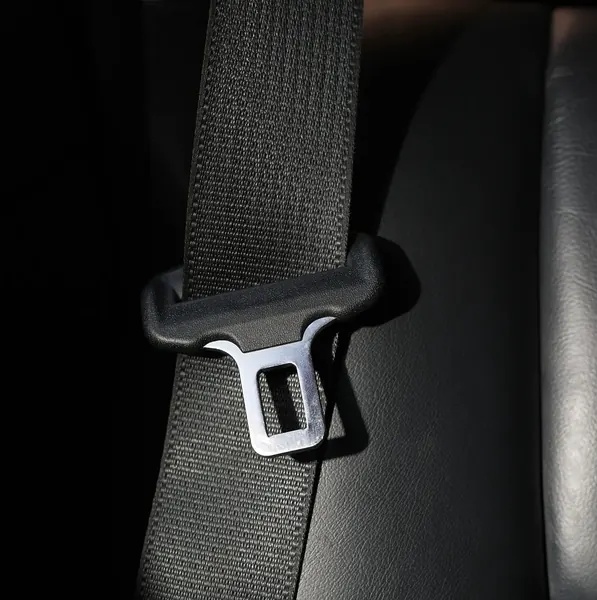

Seat belt webbing threaded through a moulded latch plate, resting against the leather trim of a vehicle seat.
Fig. 01 · Latch plate and webbing at the shoulder guide

02 · Our Export Approach

Six working stages

How an enquiry actually gets handled.

The order below is not a formality. Each stage exists because skipping it is what causes the wrong component to travel several thousand kilometres.

  1. 01

    Understanding buyer requirements

    We start with the buyer's situation rather than a catalogue. What vehicles do you serve? Is this for replacement fitment, for stock, or against a specific order of your own? The answer changes what information matters next.

  2. 02

    Product identification

    Belt type, seating position, mounting arrangement, orientation and any existing part reference. Photographs of the component being replaced are consistently more useful than a written description, and measurements settle most remaining questions.

  3. 03

    Communication

    Questions answered directly, in writing, with the reasoning included. Where something cannot be confirmed, we say that it cannot be confirmed rather than filling the gap with an assumption.

  4. 04

    Commercial coordination

    Quantities, commercial terms, packaging expectations and indicative timing, set out so that both sides are agreeing to the same thing. Anything still open is identified as open.

  5. 05

    Export preparation

    Goods checked against the confirmed requirement, packed for the handling an international consignment receives, and accompanied by the documentation that the particular transaction and destination call for.

  6. 06

    Shipment coordination

    Despatch arranged around the buyer's timing and receiving arrangements, with the reference information they need at their end. Changes are communicated as they arise, not afterwards.

See the export process in detail

03 · Careful Supply

General industry context

Why automotive safety components need more care than most parts.

A person seated in a car drawing the seat belt across and guiding the latch plate towards the buckle.
Fig. 02 · The moment the component has to do its job correctly

A seat belt belongs to the group of components a vehicle occupant interacts with directly and repeatedly. It is fitted once and then relied on for every journey afterwards, usually without another thought. That is exactly why the supply chain behind it deserves attention.

Two things matter most. The first is correct application — a restraint component is designed around a particular seating position, mounting arrangement and geometry, and a part that is close but not correct is not a reasonable substitute. The second is dependable product information — the buyer, and their customer after them, need an accurate description of what the component is.

We would rather ask an extra question at the enquiry stage than have a buyer discover a mismatch after a shipment has crossed an ocean. Where a requirement cannot be identified with confidence from the information available, we say so.

Buyers should also confirm the regulatory and approval requirements that apply to automotive restraint components in their own market before importing. Those requirements are set by the destination country and vary between markets — see our global markets page for what this means in practice.

04 · Our Values

Five commitments

What we hold ourselves to.

  1. Reliability

    Doing what was agreed, in the way it was agreed. Where something changes, saying so early enough that the buyer can still act on it.

  2. Clarity

    Plain descriptions, specific answers and no vagueness where precision is possible. If a detail is not yet confirmed, it is described as unconfirmed rather than glossed over.

  3. Quality awareness

    Understanding what is being supplied, where it is appropriate and what a buyer should inspect on arrival — and being straightforward about the limits of what is known.

  4. Responsiveness

    Answering within a reasonable time and treating an enquiry as a conversation rather than a form submission. Time zones are a fact of international trade; silence should not be.

  5. Long-term relationships

    Working on the assumption that the current enquiry is the first of several. That standard tends to produce better decisions than a transaction viewed in isolation.

05 · Our Perspective

On international relationships

Trade at a distance runs on accumulated trust.

The first transaction with an overseas buyer is nearly always the most laborious one. Neither side knows how the other describes things. Terminology differs between markets — what one buyer calls a latch plate another calls a tongue, and the same belt arrangement is described three different ways in three different countries.

That effort is worth spending properly. Once a buyer has been dealt with clearly, the second enquiry takes a fraction of the time, because a shared vocabulary already exists.

What that means in practice

  • We ask questions early rather than assuming, even when it slows the first reply down.
  • We confirm agreements in writing so there is a record both sides can return to.
  • We keep terminology consistent between the enquiry, the confirmation and the paperwork.
  • We would rather decline a requirement we cannot identify than send something approximate.

Next Step

Tell us what you are trying to source.

The fastest way to get a useful answer is to describe the vehicle or application, the belt type and the quantity you are working with. Photographs help more than anything else.

EnquiriesInternational buyers, distributors, workshops and trade customers