The distance between an enquiry and a delivered consignment.
Exporting automotive restraint components is a sequence of confirmations. This page sets out what each stage involves, what we can commit to, and what has to be agreed individually for every shipment.
Six positions · Illustrative sequence
Where an enquiry travels.
-
Position 01
Enquiry
A buyer makes contact and describes, in whatever detail they have, what they are looking for. Nothing is expected to be complete at this point.
-
Position 02
Requirement
The enquiry becomes a defined requirement — vehicle or application, belt type, seating position, quantity and the buyer's own market context.
-
Position 03
Product
A specific product is identified against that requirement, with the reasoning shared so the buyer can confirm it matches what they had in mind.
-
Position 04
Preparation
Commercial terms are settled and the goods are prepared: checked against the confirmation, packed for international handling, documented as the transaction requires.
-
Position 05
Export
The consignment is despatched under the arrangements agreed for that shipment, with the reference information the buyer needs at their end.
-
Position 06
Destination
Arrival at the buyer's market, where the goods enter their own receiving, inspection and onward supply process.
This sequence describes how export transactions in this trade are generally structured. The specific terms, transport mode, routing, documentation and timing of any shipment are agreed with the buyer for that shipment. Nothing on this page should be read as a committed procedure, route or delivery time.
A requirement is not the same as a request.
"I need seat belts" is a request. "I need three-point belts for the outer rear positions of this vehicle, in this quantity, for replacement fitment in my market" is a requirement — and only the second one can be answered accurately.
Most of the delay in international sourcing comes from requirements that are still partly undefined when quoting begins. The parties then spend three exchanges discovering they were discussing different things.
We would rather ask for the missing detail immediately. It feels slower on the first reply and is faster overall, because it prevents the whole conversation from having to restart later.
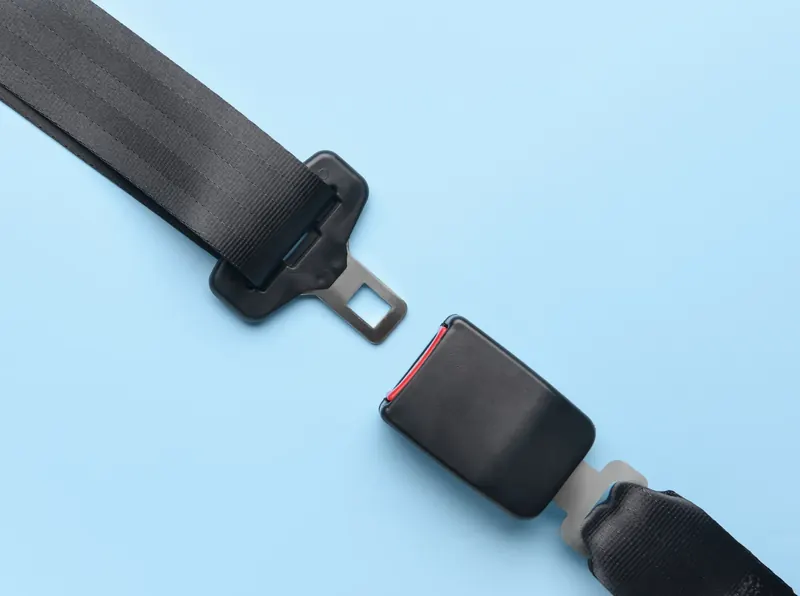
Fig. 01 · Assembly, laid out
Six pieces of information that settle most enquiries.
- 01
Vehicle or application
Make, model and year where known, or a description of the machine or seating installation the belt is for.
- 02
Product photographs
Photographs of the existing component from several angles — including the latch plate, buckle and the mounting points — resolve more ambiguity than any other single input.
- 03
Dimensions, where relevant
Webbing length, webbing width and the spacing of mounting points. Useful whenever an exact original reference is unavailable.
- 04
Component identification
Any numbers, markings or labels present on the existing part, and whether the requirement is a complete assembly or an individual component.
- 05
Seating position & orientation
Front or rear, inner or outer, left or right hand side, and whether the vehicle is left or right hand drive.
- 06
Buyer specifications
Anything your own market or customer requires — packaging, labelling, quantity breakdown, or information you need to pass on.
Confirmed per transaction
The part of the work that happens in writing.
03 · Commercial Coordination
Professional communication around an enquiry
Once a product is identified, the commercial conversation begins: quantity, packaging, commercial terms and indicative timing. We set out what is agreed and what remains open, so a buyer is never guessing which parts are settled.
Where a buyer needs an internal approval before proceeding, we would rather provide the written detail that makes that approval possible than chase for a decision.
04 · Export Preparation
General preparation considerations
Preparation covers checking goods against the confirmed requirement, packing them for the handling an international consignment receives, and assembling the information that has to travel with them.
For seat belt products specifically, packing has to keep webbing clean and free of hard creases while protecting buckles, latch plates and any retractor hardware from impact and abrasion.
05 · Documentation
What paperwork may be involved
International shipments generally involve commercial documentation describing the goods and the transaction, and may involve regulatory documentation depending on the destination country, the nature of the goods and the terms agreed.
What applies to any particular shipment is established for that shipment. We do not publish a fixed list of documents, because the correct list depends on the destination and the buyer's own import arrangements.
06 · Shipment Coordination
Coordinating despatch
Shipment coordination means aligning despatch with the buyer's timing, chosen mode of transport and receiving arrangements, and keeping them informed as the consignment progresses.
Transport arrangements, routing and carriers are agreed case by case with the buyer. We make no claim to a fixed shipping arrangement or a guaranteed transit time.
An honest note on scope. Import requirements for automotive restraint components are set by the destination country, not by the supplier. Buyers should confirm the regulatory, approval and documentation requirements that apply in their own market before committing to an order. We will provide the product information we hold; we cannot determine another country's import rules on a buyer's behalf.
Clear, confirmed, and on the record.
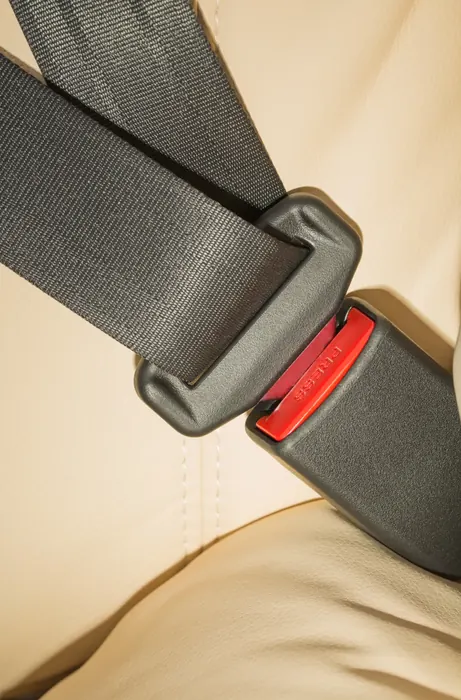
Working across time zones removes the ability to resolve something in a two-minute conversation. Everything of consequence therefore has to be written down, and written down in a way that survives being read a week later by someone who was not part of the original exchange.
Requirement confirmation
Before anything is committed, we restate the requirement as we have understood it and ask the buyer to confirm. It is a short step that prevents the most expensive category of error.
Timelines
Indicative timing is given as indicative. Where a date depends on something not yet settled, we say what it depends on rather than offering a number that cannot be relied on.
Consistent terminology
The words used in the enquiry, the confirmation and the documentation are kept the same. Terminology for restraint components varies between markets, and consistency is what keeps everyone aligned.
Saying what is not known
If a detail cannot be verified, we say that plainly. A buyer can plan around a known gap; they cannot plan around a confident answer that turns out to be wrong.
Ready to describe a requirement?
Send the vehicle or application, the belt type and the quantity — and attach photographs if you have them.