Product identification, commercial coordination and shipment preparation, handled as one conversation.
Section 01 · The Work
What it takes to send a safety component across a border.
A seat belt is not a general commodity. It is a restraint component fitted to a
specific vehicle position, and the buyer on the other side of the world has to be
confident that what arrives is what they asked for.
Most of the value in export supply is created long before anything is packed.
It is created in the questions that get asked, the information that gets confirmed,
and the clarity of the answers that come back.
Establishing exactly which component is required — the belt type, the seating position, the mounting arrangement and the vehicle it is intended for. Photographs and existing part references usually do more than a written description alone.
02
Buyer requirements
Understanding what the buyer's own market expects: the vehicles they serve, the quantities they work with, the packaging and labelling that suits their onward handling, and the information their customers will ask for.
03
Communication
Answering in plain language, within a reasonable time, and confirming what has been agreed in writing. Distance removes the option of walking to the shelf together, so the written record has to carry the detail.
04
Documentation
International movement of goods generally involves commercial and regulatory paperwork. What is required depends on the destination, the transaction and the buyer's own import arrangements, and is confirmed for each enquiry rather than assumed.
05
Packaging
Seat belt assemblies travel with webbing, hardware and moulded parts in the same package. Packaging is there to keep the webbing clean and uncreased and to protect buckles, retractors and latch plates from impact and abrasion in transit.
06
Shipment & delivery planning
Coordinating despatch around the buyer's timing, mode of transport and receiving arrangements, and keeping them informed as the consignment progresses.
07
The relationship afterwards
International trade rewards continuity. A buyer who has been dealt with clearly once will describe the next requirement faster, and the second enquiry is almost always easier than the first.
Section 02 · The Product
Fig. 02 · Assembly Detail
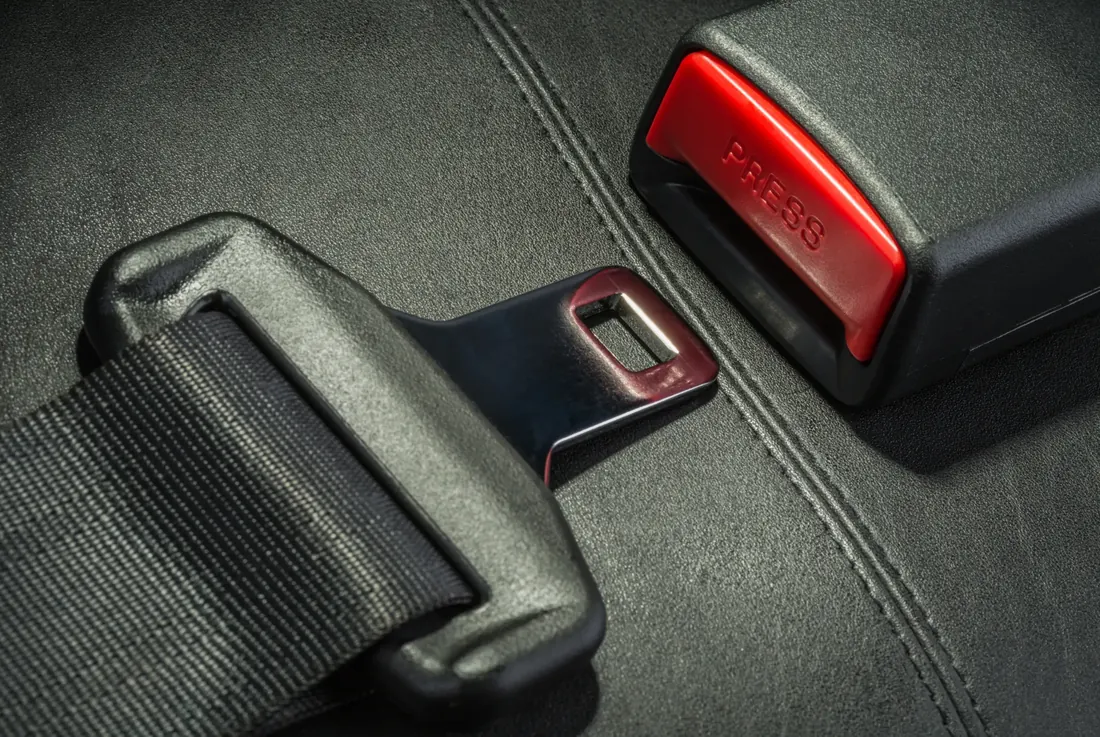
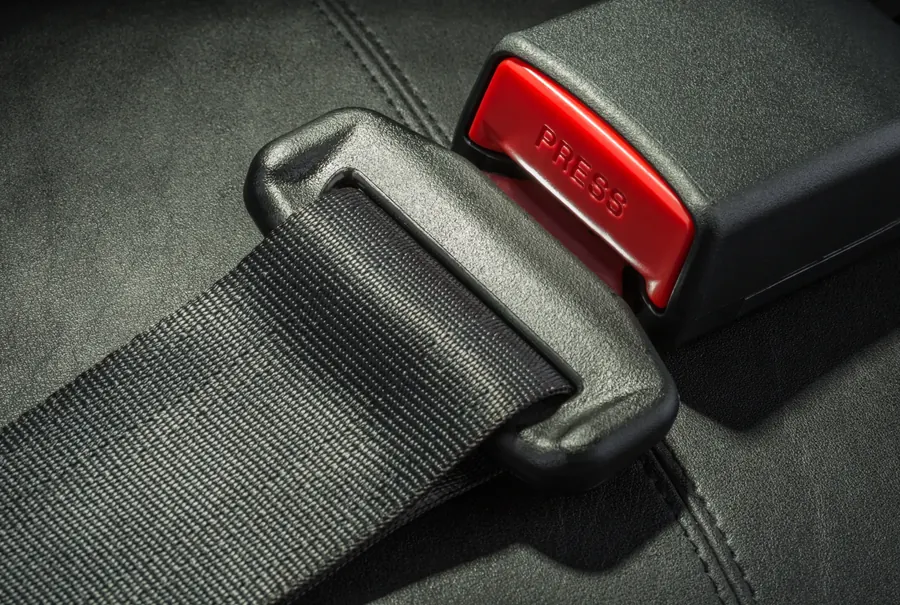
Webbing, latch plate and buckle receiver — the three elements every enquiry has to pin down
Automotive Seat Belt Assembly
One component, several decisions.
A seat belt assembly is a system rather than a single part. The webbing carries the load,
the latch plate and buckle receiver make and release the connection, and the mounting
hardware ties the assembly to the vehicle structure. Each element has to suit the vehicle
and the seating position it is going into.
Product family
Automotive seat belts, seat belt assemblies, replacement seat belts, buckles, receivers and related restraint components.
Typical application
Passenger vehicles, commercial vehicles and replacement fitment, subject to the requirement confirmed for each enquiry.
What we confirm
Belt type, seating position, mounting arrangement, vehicle or application reference, and quantity.
Technical detail
Specifications, dimensions and any available documentation are shared against a specific enquiry — available on request.
This is the general shape of an export transaction in this trade. The detail of any
individual shipment — the terms, the route, the paperwork and the timing — is agreed
for that shipment, with the buyer, before anything is committed.
01
Requirement
The buyer describes what they need — the vehicle or application, the belt type, the seating position and the quantity they are working with.
02
Product Identification
The requirement is matched to a specific product. Photographs, measurements and existing part references are used to remove ambiguity before anything is quoted.
03
Commercial Coordination
Quantities, commercial terms, packaging and timing are discussed and confirmed in writing so both sides are working from the same understanding.
04
Export Preparation
Goods are prepared for international movement: checked against the confirmed requirement, packed to survive handling, and accompanied by the documentation the transaction calls for.
05
Delivery
The consignment is despatched and the buyer is kept informed through to arrival, with the reference information they need for their own receiving process.
The sequence above describes the general workflow of an export transaction in this
industry. It is offered as orientation for buyers who are new to sourcing internationally,
not as a guarantee of a fixed procedure, route or timeline.
Section 04 · Global Connections
Every enquiry opens its own route.
There is no single path from a supplier in India to a workshop, distributor or
replacement-parts business overseas. Each buyer brings a different market, a different
vehicle parc and a different set of expectations about documentation and packaging.
So rather than publish a map of places we claim to reach, we would rather hear where
you are and what you are trying to source. Tell us the market, the vehicle or
application, and the component — and the conversation starts from something real.
Illustrative diagram · Route references are notational, not destinations
Section 05 · Buyer Perspective
General industry guidance
Why international buyers weigh supply reliability so heavily.
Restraint components are fitted once and relied on every journey afterwards
A seat belt is one of the few components in a vehicle that a person puts their hands on
every single time they travel. That is the standard the supply chain behind it is judged against.
Consistent product information
A buyer reselling or fitting a component needs to describe it accurately to their own customer. Information that changes between enquiry and delivery creates work for everyone downstream.
Correct application
A restraint component fitted to the wrong seating position or the wrong mounting arrangement is a problem, not a saving. Confirming the application is the single most valuable step in the process.
Clear communication
Time zones, languages and distance all slow a conversation down. Buyers value a supplier who answers the question that was actually asked, and who says so plainly when something is not available.
Careful packaging
Webbing that arrives creased, contaminated or abraded is difficult to present to an end customer. Packaging is part of the product as far as an international buyer is concerned.
Documentation that matches the goods
Paperwork which disagrees with the consignment causes delay at the buyer's end. Descriptions, quantities and references need to line up.
Dependable coordination
Buyers plan their own commitments around a despatch. Being told early about a change is far more useful than being told late about a problem.
Quality awareness
An informed supplier can explain what a component is, where it is appropriate and what the buyer should check on arrival — without overstating what is known about it.
International buyers, distributors, wholesalers, workshops, replacement-parts
businesses and other professional customers are welcome to get in touch. Tell us the
market you serve and the component you are looking for, and we will take it from there.